
Morgan Stanley on Thursday became the latest brokerage to question the valuations of Indian equities and downgraded them from 'overweight' (OW) to 'equalweight' (EW) and recommended taking some money off the table. "We move tactically EW on India equities after strong relative gains - we expect a structural multi-year earnings recovery, but at 24 times forward price-to-earnings (P/E) we look for some consolidation ahead of US Fed tapering, an RBI hike in February and higher energy costs," Morgan Stanley equity strategists, led by Daniel Blake and Jonathan Garner, said in a note on Asia Pacific markets. The brokerage has upgraded Indonesia to OW, while maintaining an EW stance on China and UW on Taiwan.
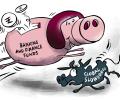
Even as banks and finance companies are reporting record-high earnings, their weighting in the benchmark National Stock Exchange Nifty50 Index has seen a downward trajectory. Investors expect a stronger performance from other sectors in the new year. Currently, banking, financial services and insurance (BFSI) companies collectively hold a weighting of 34.5 per cent, down from 36.7 per cent at the end of December 2022 and a record high of 40.6 per cent at the end of December 2019. This represents the sector's lowest weighting in the index since December 2021 when it stood at 33.7 per cent.

Equity fundraising through initial public offerings (IPOs) rose 20 per cent during the financial year 2023-24 (FY24). During the period, 76 Indian corporates raised Rs 61,915 crore through main board IPOs, compared to Rs 52,116 crore mobilised by 37 IPOs in 2022-23, as disclosed by PRIME Database. However, if one excludes the mega Life Insurance Corporation (LIC) IPO, which came out in 2022-23, IPO mobilisation increased by 58 per cent from last year.

Sun Pharma was by far the biggest gainer in the Sensex pack, surging 8.13 per cent, followed by Dr Reddy's at 4.92 per cent.

Cash trading volume declined in 2022, even as benchmark indices outperformed their peers. The average daily trading volume (ADTV) for the cash segment fell 18 per cent year-on-year to Rs 61,392 crore (NSE and BSE combined). The ADTV for the futures and options (F&O) segment (NSE and BSE combined) stood at Rs 125 trillion (notional turnover), up 117 per cent from the previous year.

US Vice President Kamala Harris, who is of Indian and African heritage, has formally secured the Democratic presidential nomination becoming the first Indian-American to win the nomination from a major political party, and chose Minnesota Gov Tim Walz as her running mate on Tuesday.

While the market may remain volatile this year, analysts expect equities to deliver positive returns by outperforming inflation and government bonds, supported by the fiscal stimulus in the US.
The index gained 572 points, or 2.4 per cent, this week while the Nifty added 164 points, or 2.3 per cent

Stocks of Hindustan Petroleum Corporation Limited (HPCL), Bharat Petroleum Corporation Limited (BPCL) and Indian Oil Corporation Limited (IOCL) have more headroom left despite the sharp run in the last few weeks, suggests a recent report from Morgan Stanley. Stocks of these oil refining and marketing companies (OMCs), it believes, are seeing multiples re-rate as investors reassess long-term growth prospects. "IOCL trades at one year forward P/BV of 1.2x, 19 per cent below +1 standard deviation (SD); BPCL trades at one year forward P/BV of 1.5x, near historical averages; HPCL trades at one year forward P/BV of 1.5x, near +1SD," Morgan Stanley said.

Equity benchmark Sensex ended marginally higher after a choppy session on Friday as concerns over the economic impact of the second wave of Covid-19 and pace of vaccination weighed on investor sentiment.

Domestic markets are also aided by a rally in the global markets with US market surging to record high and a firming trend at other Asian bourses.

The US Federal Reserve on Wednesday (local time) raised interest rates by 75 basis points (bps) or three-quarters of a percentage point in the boldest move since 1994.

In 2014, the benchmark Sensex rose by 6,328.74 points or 30 per cent and recorded a record high of 28,822.37 on November 28.
From the Sensex pack, Power Grid, Infosys, Asian Paints, Mahindra & Mahindra, HCL Technologies, IndusInd Bank, Tech Mahindra, Bajaj Finance, Wipro, Tata Consultancy Services, HDFC Bank and Titan were the major gainers. Tata Steel and Bharti Airtel were the laggards.

Analysts expect global markets to remain in consolidation mode with a negative bias over the next six months.

Titan was the top gainer in the Sensex pack, climbing over 4 per cent, followed by Bajaj Auto, Maruti, Reliance Industries, ONGC and UltraTech Cement.

As we say shalom to 2016, the key drivers for the markets in the year ahead have become more obvious, says Neeraj Gambhir, managing director and head of fixed income, India, Nomura. First, there is a surging dollar. Second, rising commodity prices. Then, we have the effects of demonetisation.

HSBC maintained "overweight" rating on Indian equities, saying "fundamentals are strong".

Benchmark stock indices Sensex and Nifty spurted over 1 per cent at close on Monday following buying in IT, oil and gas and banking shares bolstered by firm global trends. Rising for a second straight session, the 30-share BSE Sensex rallied 760.37 points or 1.41 per cent to settle at 54,521.15. During the day, it jumped 795.88 points or 1.48 per cent to 53,760.78. The broader NSE Nifty advanced 229.30 points or 1.43 per cent to 16,278.50 as 41 of its constituents advanced.

Reliance was the top gainer in the Sensex pack, surging over 3 per cent, followed by ICICI Bank, Bharti Airtel, Dr Reddy, Maruti and ITC.

Lower crude oil prices would impact India's inflation, CAD.

If investing in Bitcoin, adopt a three to five-year horizon and invest systematically to gain from its volatility.

IndusInd Bank, Kotak Bank, ICICI Bank, Sun Pharma, Bajaj Finance and Ultratech Cement were prominent gainers. NSE Nifty rose 176.65 points to 14,867.35.

Among the Sensex firms, UltraTech Cement, Reliance Industries, ICICI Bank, HDFC Bank, Bharti Airtel, IndusInd Bank, State Bank of India, Tata Consultancy Services, Larsen & Toubro, Kotak Mahindra Bank and State Bank of India were the major gainers. In contrast, Tata Motors, Maruti, Axis Bank, Mahindra & Mahindra, ITC, NTPC, Tata Steel and Bajaj Finserv were the major laggards.

Sustained foreign fund inflows and strengthening rupee are among the main reasons behind the market rally.

L&T was the top gainer in the Sensex pack, rising over 3 per cent, followed by Bajaj Finance, Reliance Industries, IndusInd Bank, SBI and HDFC Bank. NSE Nifty surged 168.05 points to 14,653.05.

Does the rally reflect expectations of improving fundamentals or they are likely to correct?

The satta market is accepting bets on how many times Modiji will mention Nehru at his election rallies, says A Ganesh Nadar with a wink.

'In the medium to long term mid-caps tend to generate higher returns, albeit with increased volatility.'

From the Sensex pack, NTPC jumped nearly 4 per cent after the company posted over 23 per cent rise in consolidated net profit in the April-June quarter of 2023-24. Power Grid, Tech Mahindra, Tata Steel, Tata Consultancy Services, Wipro, Maruti and JSW Steel were among the other major gainers.

Rebalance your portfolio in case it has become overweight on equities vis-a-vis your strategic asset allocation.

'The minimum holding period for equities should be three years.' 'Try goal-based investing.' 'Link your equity portfolios to specific goals such as retirement, purchase of a house or car...'

Enthused by the stock market rally, an increasing number of Indian executives believe the economy is on a recovery path, although a majority still feel that the worst is not over, a survey says.

'India has entered an economic super-cycle driven by a housing cycle turnaround.'

Market experts say that FIIs have been caught off-guard on their exposures to companies with high-leverage and those facing cyclical headwinds.
The rally in PSBs, analysts feel, was more a knee-jerk reaction to the development, and the actual benefits will start to accrue once the addition takes place in 2024. "The actual benefit for banks from the inclusion in JP Morgan's EM Index will accrue from June 2024 onwards. "Until then, the larger fundamentals of the market will dictate the moves. "Once the initial euphoria subsides, bond markets will look to global cues which may trigger fresh selling," said Siddharth Khemka, head of retail research, Motilal Oswal Financial Services.

The market capitalisation of BSE-listed firms reached an all-time high of Rs 288.50 lakh crore on Wednesday amid an ongoing rally in equities, as the benchmark Sensex settled above 63,000-level for the first time ever. The 30-share BSE barometer climbed 417.81 points or 0.67 per cent to settle at 63,099.65, its fresh record closing high. During the day, the benchmark jumped 621.17 points or 0.99 per cent to 63,303.01, its lifetime intra-day peak. Extending its winning momentum to seventh day, the Sensex has rallied 1,954.81 points or 3.19 per cent during this time.

'Investors should ideally consider equity allocations from a medium-to-long term perspective.'
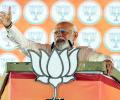
In nearly 100 seats, the BJP stands almost no chance of winning. In 200 seats, it is a direct fight between the BJP and the Congress where the BJP has an upper hand. In 243 seats, the BJP is pitted against regional parties and it is not going to be easy. That is why 400 seats may end up as a pipe dream, states Ramesh Menon, author of Modi Demystified: The Making of a Prime Minister.
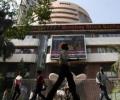
The rally in Indian market is mainly due to resumption of foreign institutional investor inflows.
